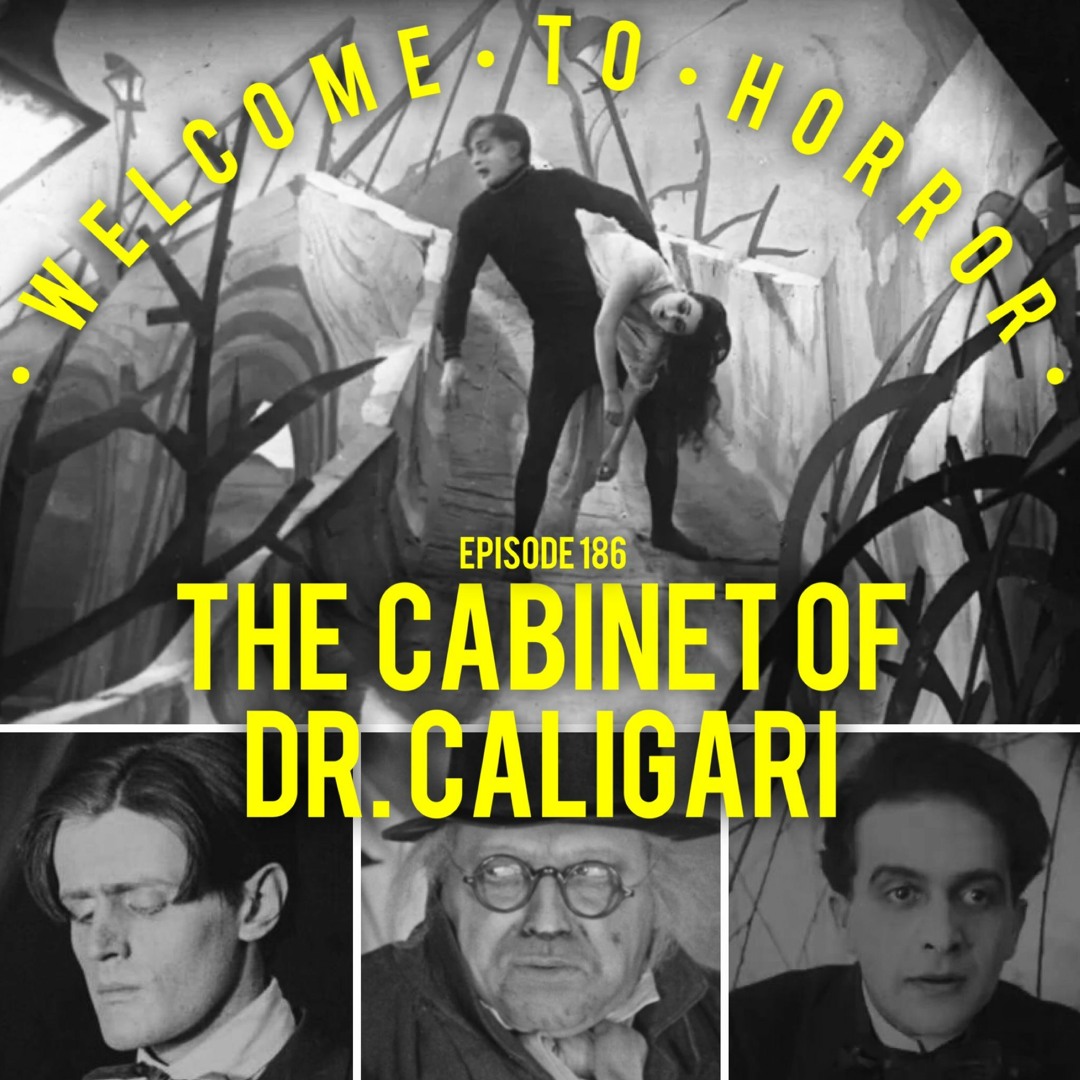
The Cabinet of Dr. Caligari
00:39:16
About
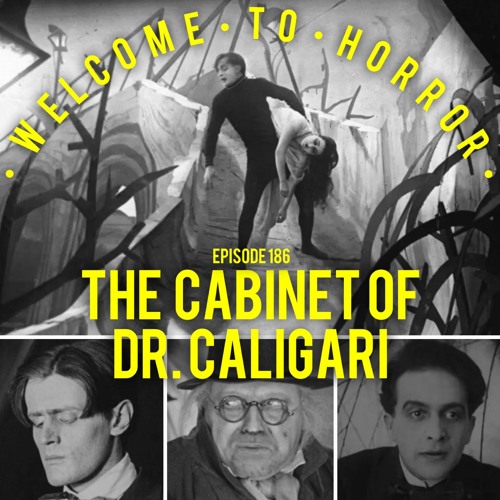
And so we conclude our festive season of ‘Silent Nights’ by going back even further, for the magnificent “The Cabinet of Dr. Caligari”. A film in which we witness possibly the worst interior design for a psychiatric hospital; the best (and only correct) response to petty local bureaucracy and we all empathise with a man who sleeps for 23 years and still wakes up knackered. If the point of German Expressionism was to emphasise and represent the internal emotional state over a depiction of actual reality - “The Cabinet of Dr. Caligari” is an absolute blueprint of how to do it. A triumph of ingenuity and flair over budgetary restrictions, “… Caligari” creates its own complete world that immerses the audience. However, this is not mere style over substance, with a convoluted plot featuring many a twist, making for a film that feels fresher and more modern than a lot of what would come after it. A perennial influence to this day, from Tim Burton to Rob Zombie and the Laika animation studio, this unique film may have its homages and imitators; but the original is never diminished, retaining its power over a century later. Watch (or re-watch) to avoid 103 year-old spoilers and join us.
Until tomorrow's dawn.



Famous lines
- "You fools, this man is plotting our doom! We die at dawn! He is Caligari!"— Francis
- "I must become Caligari!"— Dr. Caligari
- "The most amazing story ever screened."
Quotes verified against Wikiquote.
Transcript
Show full transcript
LeeGood evening and welcome to Horror, I'm Lee.
ChrisI'm Chris.
AdamI'm Adam.
LeeAnd Merry Christmas if I had some bells, I would ring them right now, but I don't, so instead we're going to replace that with horror, information and swearing and spoilers.
AdamSo, please be ready for that.
LeeIs there anything more festive than swearing and spoilers?
Leeas promised, we are back now to cover, 1920.
Adam1920.
LeeSo, 103 years old now, we've gone back in time, Caligari, yes, even further back into the creepy shit.
LeeI think this is the oldest film we've covered, isn't it, so far?
AdamIt's got to be, yeah.
Leeyes, so, this again is part of our Silent Night series for Christmas.
Leeand I'm very keen to hear what Chris would have thought of this film because it's, it's just, not for R2 as we said before, with the last one is a fantastic film and still plays well after all these years, but is a pretty straightforward narrative.
LeeThis is full of twist and it feels like a fucking M. Night Shyamalan.
ChrisYeah, that's what I said, like I said last episode, yeah, this could absolutely be ruined by someone giving out spoilers, and it feels strangely modern.
LeeYes.
ChrisIn, in that, and also, is this the first, like, big horror movie then?
AdamIt's, there's, there's debate but it seems to me considered like one of the earliest or possibly the earliest horror movie or horror feature maybe, I don't know.
Adamthere's, there've people made like little shorts that Edison made a show of Frankenstein that was like seven minutes long or something like that.
Adamwhich you can still see, but yeah, it's, I, I think it's certainly the oldest we've covered, it's probably one of the earliest examples of ones that you can probably still see.
AdamAs I say, there was a lot of, a lot of stuff got lost.
Adam
ChrisSo, was there another one that could have got lost?
AdamI don't think this was successful at its time and I think they, it was pretty much running, there was no, it was that legal action that really was the scuppering point for Nosferatu more than.
AdamYeah, but, you know, if you your film was successful, which this was, you know, it sort of, and again we're back to that thing of this, this was internationally successful because anyone could go and see anyone could go and see it.
AdamAnd, yeah, I mean, as, I mean, even it's just so extraordinarily its own world.
LeeThere's nothing like this film, it's just, it's so weird and, and, and that's the thing it's taken the German expressionism although Nosferatu was obviously first.
Leeoh no, it wasn't, this was first, but.
AdamNo, this is first.
LeeYeah, this is like pushed that, like all the, the weird angles.
ChrisYeah, so, so that's.
LeeYeah.
ChrisSo, so I got to check about that, right? So, so that's why I thought this is German impressionism because it's, it's not like it, it's, yeah, it's it's strange.
ChrisIt's not accurate representation, it's almost like what's in the mind more than, so I, but, but we call this expressionism.
AdamThat, I mean, that was the term for it but it was sort of,
AdamI mean, it's Caligari is the sort of progenitor of it.
AdamAnd you still see it, I mean, obviously you still see it in Tim Burton.
ChrisYeah.
Adamyeah, very much so.
AdamYou see it in the sort of stop motion stuff like, Coraline.
ChrisOkay.
AdamI can't remember what that company Laika, the animation studio Laika who did that and, the, oh, James and the Giant Peach stop animation that was out a few years back.
AdamAnd.
AdamYeah, it's, I think again, I was watching because I especially sort of like the this sort of more unusual stuff.
AdamI really love watching it with Claire because I get her take on it.
AdamAnd as she said it feels like that film, that film would look like that if you made it now.
ChrisLike yeah, yeah.
LeeAbsolutely.
AdamYou know, it's so its own world and so and so deliberate.
LeeYeah.
AdamYeah.
LeeYou know, because you've got stuff in there like.
LeeThe chairs they're sitting on.
ChrisYeah.
LeeAnd the sort of school.
ChrisYeah, especially the one who's the the clerk or the town clerk, yeah, who's sitting up really high.
ChrisLike just it's almost he's like cartoon or so exaggerated.
AdamWell, Caligari's wearing Mickey Mouse gloves, isn't he?
AdamHe's got big white gloves with the black lines on the back.
LeeLike every it feel and it feels harder to make than a standard square room, you know, like when you see his office in the sanitarium, like it's just so like it doesn't look anything like it.
LeeIt'd be easy to make it look like an actual office, but they haven't, they've gone for this weird, crazy angles and strange painting on everything and it's, it just creates such a a nightmareish impression because everything's half real and half surreal.
ChrisYeah.
LeeYeah, it's such an unusual choice, but it works fantastic, especially for the, you know, once you the further you get into this story, the more everything you've seen till that point makes sense, kind of preempting you for.
LeeIt's incredibly intelligent.
ChrisI thought the way they used color as well throughout for the different kind of environments.
ChrisWhich was strange.
AdamI've, I mean, that's the thing, I mean, are you getting better in that sanitarium, because, you know, you've got triangular doors that peel off into the ceiling and swirls over everything.
AdamYou know, it's it doesn't feel like it would stitch a damaged mind back together.
LeeIt feels like a stoner's house, is what it feels like.
LeeA stoner architect.
AdamI said it's like a crooked house at the fair.
LeeYeah.
AdamAnd again, it's something that's definitely sort of, it, it, it's weird because this is one of those things where Nosferatu is quite influential but in sort of story terms and things like that.
AdamWhereas this, you can see this in things.
LeeYeah.
AdamLike I say, you can really see it in Tim Burton, you can see it in sort of some other films as well.
AdamBut I was flabbergasted with this.
AdamSo, all the sets are this was done on a pretty.
AdamYou know, this was done on a pretty low budget.
AdamAnd all the sets are made from card and paper essentially.
LeeWow.
AdamRight.
AdamAnd in 1920, in Germany, electricity was heavily rationed.
AdamIt was still on the ration after the First World War.
AdamAnd all the light and all the shadow that you see in this film is painted on.
LeeWhat?
AdamAnd when you watch it with that knowledge, it's mind-boggling.
AdamThe the the thought, the detail and the it's, it's like someone's fever dream.
ChrisYeah.
LeeHoly shit, I'm just I'm just looking at images now, there's a picture of the somnambulist when he's standing there and he's got the light behind him.
LeeAnd you're right, I can see it in the still that it's, it's painted on the wall and they've placed his head in exactly where it would be.
LeeIf the light were around it, but yeah.
LeeYou can, you can, now you've said it, I'd never have picked up on that, but now you've said it you can totally see it.
LeeThat's incredible.
AdamIt's like there's a bit where there's they keep doing a staircase which is obviously meant to be lit through it's got like a huge shadow of some bars that go up the stairs and when you actually look at it, those shadows are painted.
ChrisYeah.
AdamYeah.
AdamBut it's shot in such a way and the way the characters are dressed and things like that means that it's sort of.
ChrisIt all just.
AdamIt doesn't stand out except the sort of it really is a total trick of the eye.
ChrisYeah.
AdamAnd it's and you know, like I say, when I found that out, I was just like fucking flabbergasted because it's just so.
AdamYou, you know, it's like this it feels like it's made by an obsessive.
ChrisYeah.
AdamWhere actually it's made by a series of obsessives, but it sort of has that sort of, yeah.
LeeBut it lends back to that pre, because obviously theatre was, you know, a theatre was it was it had been going on for a long time previous to this and this is a new medium that they were bringing that to.
LeeBut yeah, it is, it's that set painting and stuff that you see at live productions in the theatre and it's bringing that onto a big screen.
LeeWhere now we assume, oh, that's how they do it now, that was how they did it back then.
LeeBut they didn't, you're quite right, they'd taken the old styles and given it this whole new lavish.
LeeAnd this probably led to a lot of the way that stuff was lit and things because of how they'd not lit it but made it look as if it were.
LeeIt's incredible.
LeeIt's just.
AdamAnd and this is the thing, although, and I, I hope that it qualifies my statement on Nosferatu about, oh, it's a moving photograph.
Adamis that this is a moving illustration.
LeeYeah.
AdamBut not in the sense of a cartoon, this is just, you know, it, it, it feels like an like Edmond Gory or something like that.
AdamIt feels like illustrations from a collected works of Edgar Allan Poe or something like that.
AdamAnd it's sort of just so mind-boggling that it's sort of, you know.
AdamAnd.
ChrisThey even use like effects at one point with the text at different angles and, and, and the amount they use a lot of the, like vignetting and darkening parts.
LeeYeah.
ChrisAnd, yeah, but again, like you'd think potentially like it could have been done too much, too wrong and some, but yeah, just the whole thing, every element, all of that just comes together to work perfectly.
AdamAnd and it is and it is out of necessity, it's out of financial necessity essentially.
AdamYou know, they couldn't afford to have lights burning to do, like set up like these huge shadows.
AdamSo it's like.
LeeEspecially if you've got cardboard sets, you don't want too much hot lighting going on or you're just asking for a massive disaster really.
AdamBut that the bit where he's running along and it's Dr. Caligari and keeps appearing.
AdamAnd that was the that was the publish the publicity for this film was they just put up posters with just that written on it.
Chris
AdamDidn't say didn't say it was a film, didn't say it was.
AdamIt didn't tell you anything, it was just posters with you have to become Caligari posted all over fucking Berlin, you know.
AdamAnd it's like.
AdamSo, in a weird way you're like, there's that sort of thing where it's like, oh well, you know, if it's a silent film, probably if you like arthouse, you'll probably be able to deal with watching silent or whatever like that.
AdamAnd it's like, I, I feel this was, this was arthouse at the time.
LeeYeah.
AdamYou know what I mean, this, this sort of was.
AdamThis was like the a 4AD, not 4AD, that's a record label.
LeeA.
Adam24.
AdamThat's why I think.
AdamTo be honest, 4AD, very much in the same sort of wheelhouse, the Gothic wheelhouse there, I would say, so I was probably on the right on the right lines.
AdamBut it's also really interesting because you've got, so Cesare, the somnambulist is played by an actor called Conrad Veidt.
AdamAnd.
AdamConrad Veidt is fucking brilliant.
AdamAnd apart from the fact of of the that effect of just his like heavily made up eyes.
Chris
AdamBut when he opens them gradually and then just stares and you're like, that's that that is not a special effect, that is not.
AdamDo you know what I mean, that is just an actor with just the right look and the right level of intensity and everything else like that that it just comes through.
AdamYeah.
AdamAnd.
Adambut Conrad Veidt was, this was like one of the films that sort of really made him a household name.
Adam
AdamAnd so he, he did lots of, he was in a silent anthology horror which I've got to see now called Waxworks.
Adamhe's in a film called The Hands of Orlac which is the classic tale of when someone gets their hands cut off and replaced with those of a murderer.
Adam
AdamThe
AdamStudent of Prague.
AdamBut he's in a film called The Man Who Laughs and that the character he plays in that is someone who's had a smile carved into their face.
Chris
AdamBecause that's the thing is this is all pre-code as well, like sort of, you know.
AdamBefore, again, like we were saying about early days, there were no standards and practices at this point, they just happened to not, I don't know.
AdamI have like live fucking on camera or whatever.
AdamDo you know what I mean, there wasn't any law saying you couldn't do that sort of shit.
AdamSo all the stuff that they would imply would be pretty sort of like heavy duty like Caligari is, you know.
AdamIt's like murder and mental illness and things like that.
Adambut yeah, so The Man Who Laughs, he plays this character who's had a grin cut into his face.
AdamAnd he is that image is the inspiration for the Joker, the Batman villain.
ChrisYeah.
Adam
AdamAnd I sent you guys that on the WhatsApp.
LeeThat's what it was.
AdamThe picture of Conrad Veidt in The Man Who Laughs.
Chris
AdamAnd he's just the fucking Joker, isn't it?
AdamIt's just that comic book Joker.
Adam
AdamBut he was, like, so he, he started life he wanted to be a surgeon.
AdamAnd found out that he was absolutely no aptitude for it.
Adamand then.
ChrisProbably lucky he didn't continue with that then.
AdamYes, very much so, otherwise he wouldn't have been Conrad Veidt.
AdamThe amazing actor and philanthropist, it would have been Conrad Veidt.
AdamThe the Berlin mass murderer of Berlin who fucked up more operations than anyone.
AdamBut,
AdamAnd then he sort of, he looked into he was in a play at school and really enjoyed it and got some good notices and so he was like, oh, maybe I'll try acting.
AdamAnd apparently his dad fucking hated the idea.
AdamBut his mum quietly encouraged him.
AdamAnd bunged him a few quid, you know, she sort of like financed him and encouraged him to keep going.
AdamAnd he became part of a theater troupe and was doing quite well, then World War I breaks out and he's in he ends up in the German army at the Eastern front.
AdamAnd gets sent evacuated home with the jaundice and pneumonia and his was declared unfit for service.
Adam
AdamAnd then he went back to the theatre, got some really rave reviews and then just became this figure in German silent films.
AdamHe was doing and playing a lot of like, obviously, like villainous roles and stuff like that.
AdamAnd.
AdamIn the 20s he went to Hollywood and was doing quite well there.
Adambut he, because obviously he was still doing silent initially been doing silent films,
AdamHe didn't have a great grasp of English, so when talkies came in, he went back to Germany.
Adam
AdamBut then, he obviously you then get to the point where the Nazis come in.
AdamTo the to the story, as usual.
AdamAnd,
AdamWhen they took power, one of the things that Joseph Goebbels did was they they went through the film industry and like the entertainment industry.
AdamAnd they were, I mean, they were closing down anything that they considered decadent and everything and they went through the film industry and basically,
AdamEveryone there, they were trying to get rid of anyone, obviously anyone Jewish, anyone politically opposed to them and it was just like a sort of mass clearing out.
AdamAnd.
Adamhe had this racial questionnaire that everyone involved in the film industry had to fill out.
Adam
AdamAnd Conrad Veidt put his race down as Jewish, he wasn't Jewish but his wife was.
AdamAnd it was and basically they'd said to him, oh, well, if you, you know, if you, if you get divorced and declare your support for the Nazi party, you can keep working.
AdamBecause he was that big a star.
AdamAnd he basically told them to fuck off.
AdamAnd it was like, no, that's my wife.
LeeWhat are you talking?
AdamYeah.
AdamAnd he was, you know, and out of solidarity with the Jewish people, he was it was also because he he'd already been quite a vocal opponent to the Nazis as they got to the point where they took power.
AdamSo, basically, yeah, he was like, no, that's we're not doing that.
AdamSo, him and his wife emigrated to England in 1933.
AdamAnd he started appearing in British films and obviously he was living in England, so his his English had improved.
AdamAnd he worked with, like did a few films with Michael Powell, like during the 1940s and stuff.
AdamYou know, and it was, you know, he was doing quite well over there, then he went to Hollywood.
AdamAnd basically, it was he did it because he was, he did it to assist the British war effort by trying to appear in films that would encourage America who weren't in the war.
AdamTo join in, you know, so essentially, you know, anti-Nazi propaganda for want of a better word.
AdamBut, so so he went to America and was doing that and he said that he realized that he was going to get type cast as Nazis anyway because he because of his accent.
AdamSo his contract stipulated, yeah, I'll play a Nazi but they've always got to be the villain.
AdamYou know, there was no sort of soft soaping it or anything as far as he was concerned.
LeeI mean that's, I mean that's a ridiculous thing, isn't it?
LeeWill you turn on your wife, basically accept her terrible fate.
LeeBut yeah, and say you love us.
LeeBut you get to keep your job.
LeeWho in the world do they think would do that?
ChrisYou got to be pretty selfish, aren't you?
AdamYeah, no.
AdamYeah.
AdamI know.
AdamThis is, I mean, it's, it's, I mean, well not only that, but also, but, I mean, this is something that I just thought was incredible.
Adam
AdamSo, as I say, he moved to America in 1941, but he was he just was worried about the like the kids in the Blitz.
AdamSo, he got his lawyer in London, like he got his lawyer in London to buy on his behalf, 2000 large chocolate bars, 2000 envelopes with, cash in them and 2000 one tin one pound tins of sweets.
AdamAnd got them sent to all the bomb shelters in, London to be given to needy kids.
AdamLike if, you know, just sort of like that was the the thing.
AdamAnd it was like, you know, he I think it was a genuine, you know, he genuinely seemed to have a.
ChrisSo, cinema villain, real life hero.
LeeYeah.
AdamYeah.
AdamVery much so, and he just sort of and that's the thing, he ended up I think his.
AdamLike his big American film was he's like the villain in Casa or one of the villains in Casablanca.
Chris
AdamAnd it's,
ChrisAnd funnily enough though, I was going to say in Doctor Caligari, he's not actually a villain, he's kind of a victim.
LeeYeah.
AdamYeah, exactly.
AdamReally.
AdamAnd it's just, but I was just, you know, I was just astounded by the fact that this guy was like, you know.
AdamIt's just like, and it's also, I mean, when you compare it to,
AdamWerner Kraus, who plays Caligari, was a Nazi supporter.
ChrisHe does a great job.
AdamOh, he was a Nazi supporter.
Chris
Adamand actually he ended up he ended up getting tried for war crimes because a minor war criminal in so much as collaboration, not like not as possible as you could think war crimes could go.
AdamBut he was, yeah, because he was basically, he got declared, what was it, an act an actor of the state, he really didn't have any trouble with keeping his job.
Adam
AdamBut, and.
AdamAnd yeah, he ended up like after the war he got like exiled from Austria and just, yeah.
AdamHe's sort of I mean it was it's it's weird to actually read about someone, you know, actually being held accountable for things they've done.
AdamBecause just don't happen anymore, really.
AdamBut, you know, in this sort of but in this sense, I mean, he was like sort of, he was.
AdamOstracized for like five years or whatever it was and, you know, and and never worked again, basically because at the time he was very much, yep, I'm a Nazi.
AdamAnd then tried to but then did try to say afterwards, oh, no, I was coerced.
AdamAnd.
AdamYeah, I don't.
LeeBy.
AdamBy the sounds of it, I don't think many people believed him.
LeeNo.
Adamwho were actually sort of aware of him.
AdamBut but like I saying, Conrad Veidt just seemed like this sort of like amazing guy and like you say.
AdamIt's it's hell of a fucking thing to turn around and tell the Nazi party to go fuck yourselves.
Chris
AdamYou know, it's not easily done.
Adamand then to actually sort of like, you know, I mean, like I say, I mean, apparently the chief air raid warden wrote him.
AdamWho was like, do you know, you're the only person who's done anything.
AdamLike like any charitable thing for these kids.
Chris
LeeSo.
AdamAnd it was like and and he was basically it was like and you're not you know, you're not even English.
LeeYeah.
AdamAnd but you're, you know.
LeeYou're the one putting yourself out there and spending your own money to to to look after people who, yeah, are falling through the cracks and I mean.
AdamAnd it was just, yeah.
LeeYeah.
LeeYeah.
LeeI mean, government in time of war, obviously, have got their hands full.
LeeThey they you know, they can't look after everyone and without philanthropists like this.
AdamYeah.
LeeI mean.
LeeYeah, and it makes all the difference to somebody, you know, like a.
LeeLike you say, the kids.
AdamOh yeah, they must have been, that must have been like a fucking such a startling moment.
AdamAnd like I say, it's just a weird thing that you you'd sort of think that it was because I know the name Conrad Veidt, but it was only sort of like when I'm reading into it, it's like this sort like just got this guy just seemed like this very amazing person, you know.
Adam
AdamHe did, he did die of a heart attack whilst playing golf with his doctor.
AdamAnd a singer called Arthur Fields as well.
AdamSo, you know.
AdamAnd that golfing in LA, so it wouldn't, it weren't it weren't too bad an exit, I think.
LeeHe was doing all right, really.
LeeAnd to be fair, if you die on a golf course and you've got a doctor at hand and you still die.
LeeI don't think there's much can be done for you, really, it's.
AdamNo, it's very true.
AdamIt's very true, I don't think that anyone was sort of.
AdamYeah, I don't think no suspicious circumstances there certainly, you know, it's like.
AdamWell.
AdamI mean, something, I don't know what the score was like on the version you, you guys were watching.
AdamI watched the Eureka Blu-ray and it was, a guy called Cornelius Schwerk.
AdamAnd I actually preferred it to, because the one on Nosferatu was actually the one I watched was the original score.
AdamThey've recreated the original score that was given out with it.
AdamBut, yeah, this this one seemed pretty good, but Caligari's been like a real, both Nosferatu and Caligari because they're silent.
AdamThey've had so many people do.
ChrisYeah.
Adammusic for them, like sort of redone the score and stuff like that.
AdamBut like John Zorn and In The Nursery have done Caligari and,
AdamJust you know, it's it's just an it's just a no-brainer, I suppose, it's like, well, it hasn't got any sound, so.
LeeAnd that's what I love as well with these public domain, films.
LeeYeah.
LeeIs that anybody can just get a copy and just have a crack at it.
LeeAnd you get such a a totally different experience, you know, as I said with Nosferatu when I saw it live and it was one guy.
LeeBasically with a whole, you know, like he had loads of different instruments and he was sort of flitting in between them and at first I found it a little bit distracting because I was, because I knew the film, so I kept kind of watching what he was doing.
LeeBut he did such a good job that I just got immersed in the film.
LeeYeah.
LeeYeah.
LeeAnd.
LeeYeah, and it it sounds and it didn't feel at all distracting.
LeeBut it is great that, you know, you can watch the film with one soundtrack and then watch it with a different and it has a whole different feel to it.
LeeAnd and.
ChrisThat is really interesting.
LeeAnd you've got that ability to do it because it's public domain and it's silent, so literally you can just get it.
LeeTurn the sound off, chuck a mixing desk in it and just put your own stuff on it and it's it's a beautiful way to.
LeeTo to to experiment with sounds and yeah.
AdamAnd again, I think Caligari's pretty special because of because it's it's own thing, it's own world almost like that.
AdamYou don't whatever you put on it doesn't necessarily feel inappropriate in the sense of, you know, oh, well, they wouldn't have had they wouldn't have had an electric guitar then.
AdamThey might have put a little.
AdamOr something like you.
AdamDo you know what I mean?
LeeIt sort of.
LeeYeah.
AdamIt's so crazy just because it's such a fucking bizarre little entity on its own.
AdamYeah.
Adamand like Robert Robert Wiene who was the who directed it.
Adamhe also directed Hands of Orlac, the Conrad Veidt film that I mentioned earlier.
Adam
AdamBut,
AdamHe,
AdamHe also was.
AdamWhere are we?
AdamOh, I completely lost my thing.
LeeIt is Christmas and we are celebrating, just to let everybody know.
AdamBut, yeah, he was, he, he was another one who got a brush with the,
AdamWith the Nazi authorities because his last film in Germany was a film called Typhoon.
AdamAnd it got banned on the basis that they showed Asian characters in a more favorable light to European ones.
Chris
LeeAnd.
LeeI suppose, to be fair, that probably isn't the most petty thing.
ChrisNot the worst thing.
AdamNot by not by a long shot.
ChrisThey did a lot.
AdamYeah.
LeeYeah.
Lee
LeeReally vexed, apparently.
AdamOh my God, but it was just so, but again, you just sort of like.
AdamOh, that was it as well, and the implication that the authorities.
AdamBecause the film's set in France and like they were like, well, you show the authorities are competent.
AdamYeah, in France.
LeeYeah.
AdamBut still they're like, yeah, but people can mistake it for Germany.
LeeYeah.
AdamBut so quite rightly, I think, he, he quite rightly got the fuck out of Dodge as well.
AdamYou know.
AdamI think it just seemed to be, it's, it's weird the because it comes from such a weird little period of German.
AdamHistory where you've got sort of like post-World between the World Wars, but you have got these sort of like flourishes.
AdamAnd basically, I mean, as I say, I mean, it it went both ways in terms of the main cast of this film.
AdamOf whether they were sort of in or out.
AdamAfter 1933.
LeeYeah.
AdamYou know.
AdamAnd it's sort of.
ChrisSo, so I was going to ask, so did you say this is was from a book?
AdamNo, this is purely, this was basically.
AdamThis was.
ChrisNo, it was written for.
AdamIt was written by two guys called Carl, Carl Mayer and Hans Janowitz.
Adam
ChrisAnd not as a play, it was.
AdamNo, this was always written as a film.
LeeIt was actually been quite unusual at the time really.
LeeYeah.
LeeSo.
Adam
LeeBecause it's.
LeeIt's a new thing, it's a whole new technology.
ChrisLike seem.
LeePeople are going to.
ChrisTo come up with ideas, like seem ahead of the time.
LeeYeah.
LeeOh yeah.
LeeYeah.
AdamAbsolutely.
AdamAnd I mean, this is because, they they'd written quite a few sort of like separately, they they wrote quite a few films, but this is the only one I think they wrote together.
Adam
AdamBut they both of them worked with Murnau and, Hans Janowitz said that it was basically the inspiration came when they went to to a carnival.
AdamAnd there was just an odd looking man in the shadows.
ChrisYeah.
AdamAnd then the next day there was a report that a girl had been murdered and it was like in his head, it was like it was that guy.
ChrisAnd he started to add all these details in.
AdamAnd it all sort of yeah, and it all sort of turned into.
ChrisCuz I mean I suppose a lot of it would have worked as a play.
ChrisAnd that so some of the story aspects like it starts off, the like the early frame is off the end of the film.
ChrisIsn't it and and so calling back to that.
LeeYeah.
LeeYeah.
LeeYeah.
ChrisAnd and then all of the twists.
LeeYeah, so reusing sets and.
Adam
AdamInterestingly enough, though.
AdamThat was the the script writers didn't write that bit.
ChrisOh.
AdamThat was an addition because they, I think they actually said at one point Fritz Lang was meant to direct.
AdamOr was possibly going to direct Caligari, Fritz Lang who did like, Metropolis and, just.
Lee
AdamYeah, he's just such a again an amazing,
AdamLike director of like German silent and, talking pictures.
Adambut they were like, oh, but basically, yeah, so they think it might have been something he suggested or the producers suggested or something like that.
AdamBut basically, yeah, the script writers were really anti that.
AdamSo it's one of the first, there you go, already there's a dispute over.
ChrisYeah.
AdamYeah.
AdamYou know, there's creative differences, it's 1920.
AdamAnd, there's still a couple of disgruntled script writers who are getting shoved by a producer, it's like, yeah, but can we make it a bit nicer, Rob?
AdamBecause, because that's the thing is I it's a weird one though, because you've got.
AdamThere's like the implication of that final twist and I, I saw that they said, oh, the producers felt that it would be.
AdamTo to lighten the the mood of the film, it's to give it almost like a sort of, well, not a happy ending but like a sort of up, more upbeat ending.
ChrisYeah.
AdamAnd I don't know about you, but the fact that the guy puts the Caligari glasses on.
AdamAnd then takes them off and says, I know exactly what's wrong with him, he thinks I'm Caligari and I know how to cure him.
Adam
AdamThat does not does not come over as.
ChrisYeah.
ChrisDoesn't sound happy.
AdamThat's not it's.
AdamYeah.
AdamIt came over as like the third twist.
LeeYeah.
AdamBut it's like, oh, now I fucking is him.
AdamAnd he's going to brutally do murder him in his bed.
ChrisYeah.
AdamI know the cure for him thinking I'm Caligari.
LeeIt's funny, I.
LeeYou saying about, you know, sort of making it more palatable, recently I saw the the newest, Murder in Venice, the Nero one.
LeeYeah.
LeeAnd I didn't realize at the time when I watched it that it was actually based on an older, story, the Halloween party, in which the the victim is a a young girl.
Leeyeah, and basically she's drowned while bobbing for apples.
ChrisBut yeah, it's a mainstream audience you can't murder an eight-year-old girl in the first 10 minutes and and I was like, well, if you're going to scream off at that point.